
Small Pool Changes That Deserve Your Attention
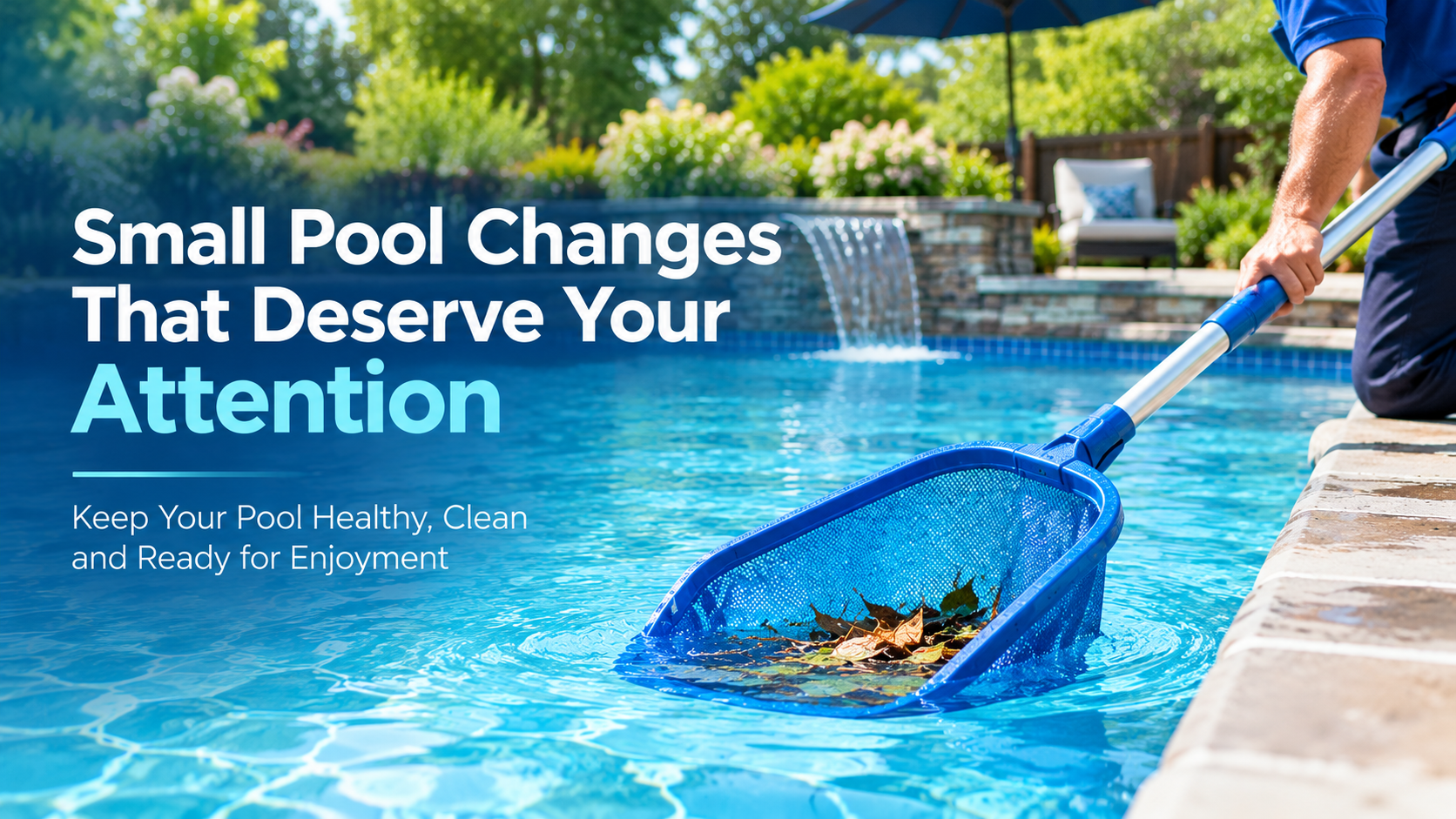
Swimming pools don’t suddenly turn bad. Small things that may occur at first: water takes longer to clear after storms, debris accumulates in the same corner, or the filter needs cleaning more frequently than usual. The changes can indicate the condition of the pool under daily usage and changing weather. As part of our pool cleaning services in Atlanta, we can make it our responsibility to make sure that pool owners don’t let these early signs slip by without paying attention, as they could destroy their pool plans.
We feel that good pool maintenance begins with observation, instead of cleaning. Our approach to reliable swimming pool cleaning in Atlanta puts the emphasis on the aspects that impact a pool with the passage of time, including water quality shifts and swimming pool circulation system functionality. When you take a look at these elements cooperating, you can be better able to make a maintenance decision as an owner and not treat each pool issue as an individual problem.
What Can Everyday Pool Conditions Tell Us?
A pool is receptive to what occurs in its surroundings. Leaves and dust are blown into the water, the water gets altered by the rain, and people playing in the water add sunscreen, oils, and other pollutants. Even if a pool is used infrequently, it can still accumulate debris and require maintenance.
Whether the water looks clean is not the important question. It’s whether the pool’s cleaning and circulation systems are capable of handling the material being added to the pool.
For instance, if debris continues to be trapped around one wall, it will show the path of the wind. If fine particles are still floating, this could indicate a filtration issue. If the surface is slippery or algae is visible, this can indicate that more attention needs to be paid to the water chemistry and sanitation.
These observations are made in conjunction with the condition of the pool. This assists in identifying typical cleanliness requirements from alerts for equipment inspection or further cleanliness treatment.
Why Is Cleaning the Water Only Part of the Job?
The water in the pool and the pool surfaces must be treated differently. Skimming will remove floating leaves but not material attached to the walls. Vacuuming gathers settled dirt, and brushing removes buildup that can be trapped on steps, corners, and other surfaces.
Water chemistry is an additional layer. Disinfectant or pH levels may be low or high outside the recommended range, and a pool can still appear clear. Testing is thus more reliable than appearance-alone assessments.
Surface skimming, brushing, vacuuming, testing the water, then adjusting as necessary with chemicals and checking any visible equipment may be part of our maintenance routine. Tasks may vary based upon the pool condition and maintenance needs.
These activities also contribute to our knowledge of the recurring problems. Sometimes, a cloudy pool will occur when it is first cleaned, in which case, a repeat cleaning may not be the answer. Needs may include further evaluation of filtration, circulation, chemical balance, and origin of debris.
How Does Atlanta Weather Change Pool Care?
The seasons, storms, sunlight and vegetation around the pool all have an impact on pool maintenance in Atlanta. These will have an impact on the rate at which debris enters the water and the attention the pool may require.
Homeowners may experience water clarity and/or chemical readings that differ from previous readings after heavy rain. If the water is used frequently and during periods of strong sunshine, it is important that the sanitiser levels are monitored more closely. It can add to the cleaning load, especially if the trees are close to the pool, in fall.
We take into account these conditions when choosing the best cleaning plan. A pool under a number of trees may require a different treatment than a pool surrounded by a paved area. Similarly, a swimming pool employed by a big family would certainly need more regular care than a pool used rarely.
For public or shared pools, the Centers for Disease Control and Prevention (CDC) suggest testing chlorine and pH levels at least twice a day, and more frequently if chlorine use is heavy. While the circumstances of residential pools are different, the guidance illustrates how water management needs to consider what is really happening rather than just what looks like.
When Should a Routine Cleaning Become a Closer Inspection?
If some changes indicate that a pool should have a cleaning visit more often than it normally gets. If your water keeps clouding, you have algae in the water, there is poor circulation, water loss that you don’t understand, or the pump sounds abnormal, there’s something wrong.
These are indicators that we look at and investigate, not assuming that more cleaning will solve the issue. Cloudy water may be caused by filtration problems, chemical imbalance or suspended particles. Different responses are needed for different causes.
In addition, pool owners can assist by checking the speed of the water’s turnover between visits. A service professional can be helpful when evaluating the pool if they can keep track of problems that occur frequently, recent storms, and odd behavior from equipment.
Cleaning is not a substitute for plumbing/equipment special repairs. But, regular monitoring can be useful in determining when more testing is needed.
What Should You Look for in a Pool Cleaning Schedule?
A useful schedule reflects the pool’s actual demands instead of following a calendar without adjustment. Weekly service may suit a regularly used pool, while pools exposed to heavy debris or frequent swimming may need additional attention. Less frequent service does not remove the need for regular water testing and equipment checks.
We recommend considering three practical factors: how often the pool is used, how quickly debris accumulates, and whether water quality remains stable between visits. These details help establish a maintenance routine that fits the property.
Our pool cleaning services in Atlanta are designed to address the cleaning and maintenance needs of residential and commercial pools while allowing service frequency to reflect individual conditions.
Let Pool Conditions Guide Better Maintenance
A swimming pool provides useful clues about its maintenance needs long before a major problem develops. Paying attention to those clues can help owners respond appropriately, avoid repeated guesswork, and plan service around actual conditions. Aquatic Excellence LLC provides reliable swimming pool cleaning in Atlanta, with maintenance options for residential and commercial pool owners. Contact us to discuss your pool’s current condition and identify a cleaning schedule that fits its use, surroundings, and upkeep requirements.
Frequently Asked Questions
Why does debris collect in one area of my pool?
Wind patterns, pool circulation, and the surrounding landscape can direct floating debris toward particular corners or walls.
Can clear pool water still have chemical problems?
Yes. Water may look clear despite unsuitable sanitizer or pH levels, so regular testing remains essential for proper maintenance.
Why does my pool become cloudy after rain?
Rain can introduce debris, dilute chemicals, and alter water balance. Testing helps determine whether treatment or filtration adjustments are necessary.
When should pool equipment be inspected?
Arrange an inspection when you notice unusual noises, weak circulation, leaks, repeated cloudy water, or unexpected changes in equipment performance.
Is weekly pool cleaning necessary?
Weekly cleaning suits many frequently used pools, but the appropriate schedule depends on debris levels, swimming activity, and water conditions.