
October 2026 - Aquatic Excellence

What to Check Before a Pool Problem Becomes a Repair?

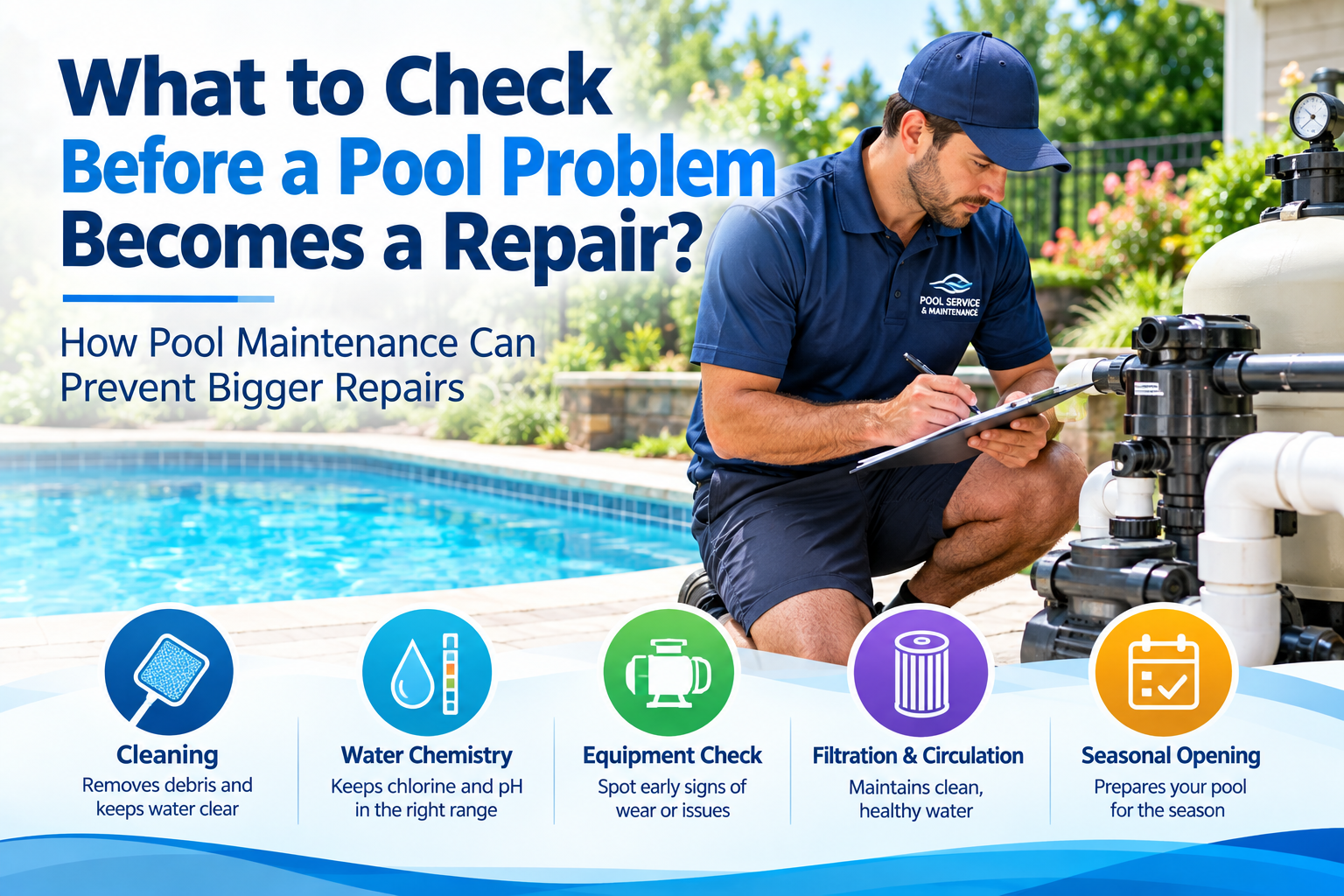
A swimming pool rarely develops a serious problem without showing smaller warning signs first. Water that becomes difficult to balance, weaker circulation, unusual pump sounds, changing filter pressure, or recurring debris can all signal that something deserves attention. Because these changes can be easy to overlook, regular maintenance should do more than make a pool look clean. Our pool cleaning service gives us an opportunity to observe the pool’s condition while completing essential cleaning and water-care tasks.

Seasonal preparation provides another important checkpoint. Our pool opening service helps restore a pool after closure while allowing us to check its equipment, circulation, filtration, and overall condition. For homeowners who eventually need a swimming pool repair service in Kennesaw ga, identifying developing problems early can be more practical than waiting for an equipment failure or visible damage.

Why is pool maintenance more than keeping water clear?

A swimming pool operates as a connected system. Water chemistry, filtration, circulation, plumbing, pumps, heaters, and cleaning all influence how the pool performs. A problem in one area can affect another.

Our experience servicing residential and commercial pools has shown us why maintenance should be based on the pool’s actual condition rather than a one-size-fits-all routine. Trees and landscaping can increase debris. Heavy swimming activity can affect water chemistry. Equipment age and usage can influence maintenance needs.

During routine service, we look at these factors together. A full skimmer basket may simply reflect seasonal debris, while recurring filter pressure changes may require further investigation. This distinction helps turn routine maintenance into an opportunity for early problem detection.

What can water chemistry reveal about a pool?

Water chemistry can reveal conditions that are not obvious from appearance alone. The Centers for Disease Control and Prevention recommends regular testing of chlorine and pH in residential pools. The CDC identifies a pH range of 7.0 to 7.8 and explains that pH affects chlorine effectiveness. It also recommends testing chlorine and pH at least twice daily for residential pools, with additional testing when pools experience heavy use.

Chlorine and pH can be affected by sunlight, swimmer activity, dirt, and organic contaminants. When water repeatedly becomes cloudy or difficult to balance, adding more chemicals may not address the underlying cause. Filtration, circulation, cleaning frequency, and other conditions may also need to be considered. For us, water testing is therefore one part of a larger maintenance process rather than an isolated task.

Why does pool opening provide an important maintenance checkpoint?

Our pool opening service can include managing the pool cover, removing accumulated debris, preparing equipment, restoring circulation and filtration, and addressing water-care requirements. The exact work depends on the pool’s condition, equipment, and manufacturer’s instructions.

We also look for issues that may have developed during the closure period. Equipment may not restart properly, water levels may have changed, or components may require attention before swimmers return.

The CDC’s Model Aquatic Health Code recognizes maintenance activities associated with seasonal closure and reopening, including ensuring systems are operational before use. A proper opening therefore does more than make the pool ready visually. It establishes a sound starting point for the swimming season.

Making Pool Maintenance More Predictable

Effective pool care is not simply about achieving clear water. It involves maintaining the conditions that allow the pool, filtration system, circulation equipment, and other components to work together properly.

Our role is to connect those maintenance tasks. Cleaning can reveal changes, water testing can identify conditions that are not visible, and equipment observation can highlight unusual operation. Seasonal opening can also provide an important opportunity to assess the pool before regular use begins.

Aquatic Excellence LLC provides pool cleaning, maintenance, pool openings, equipment repairs, pool repairs, renovations, and related swimming pool services. For homeowners considering a pool cleaning service, planning a pool opening service, or seeking a swimming pool repair service in Kennesaw, GA, consistent professional attention can help keep routine maintenance and emerging repair needs from becoming disconnected problems.
How Everyday Pool Care Prevents Bigger Problems


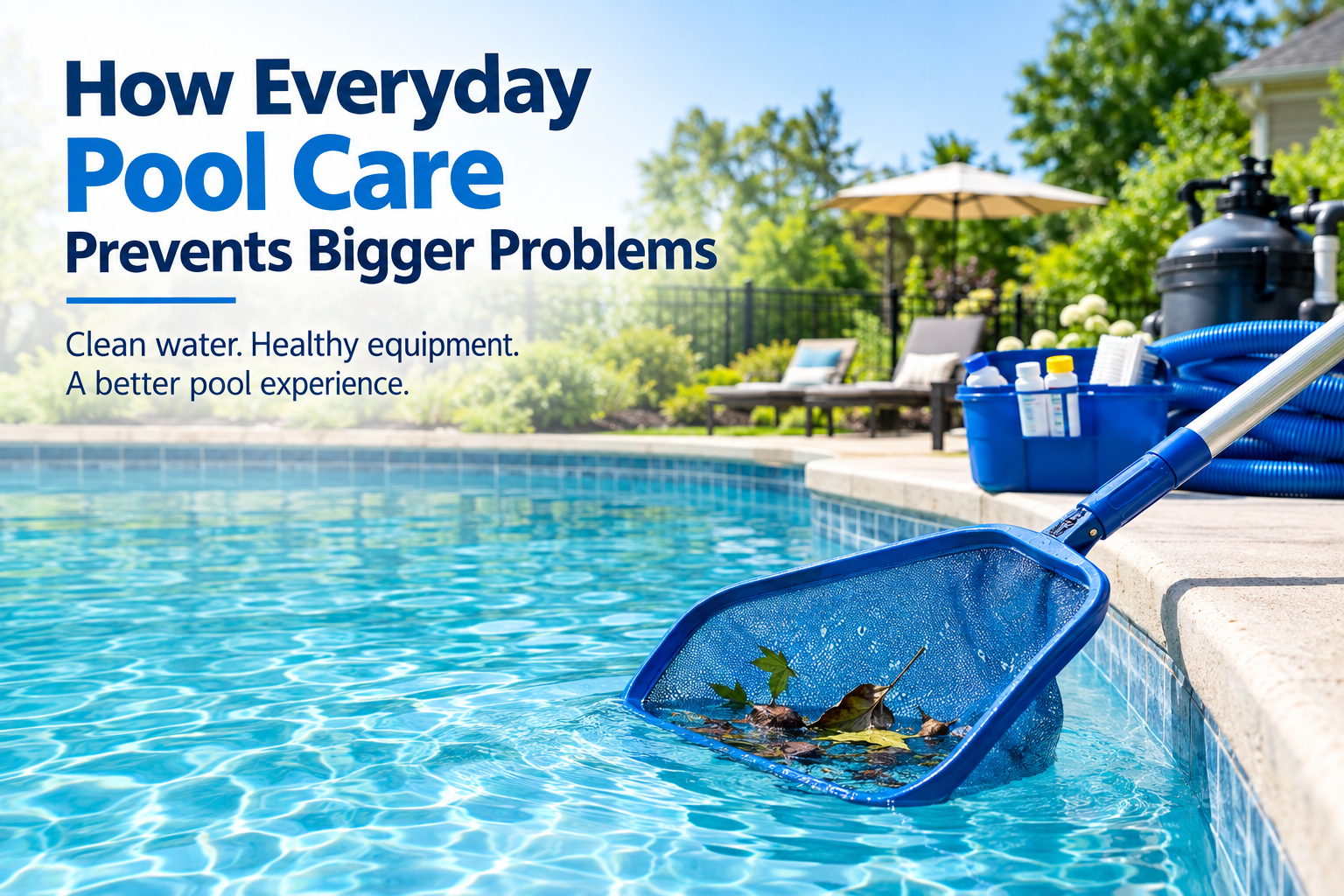
A pool can look inviting at first glance, but clear water is only one part of proper pool care. Leaves, dirt, oils, and other contaminants can affect water quality and place additional demands on filtration and circulation. When we provide pool cleaning services in Acworth, GA, we look beyond what is visible on the surface and consider the routine tasks that help keep the entire pool environment in good working order.

For homeowners considering a swimming pool service in Acworth, this broader perspective matters. Cleaning is not simply about removing debris before guests arrive. It involves maintaining the water, surfaces, baskets, filtration system, and circulation process as part of one routine. Our approach to swimming pool services focuses on that connection, because a pool is a system rather than just a body of water.

Why does regular pool cleaning matter?

Regular cleaning helps remove material that can accumulate in the water and around the pool. Leaves, dirt, insects, and other debris can enter an outdoor pool naturally, while swimmers introduce additional contaminants such as sweat and dirt.

The Centers for Disease Control and Prevention explains that chlorine and pH are key defenses against germs in residential pools and recommends routinely checking both. The agency recommends maintaining pool pH between 7.0 and 7.8 because pH affects chlorine effectiveness, swimmer comfort, and the condition of pool components.

For us, that reinforces an important point: cleaning and water care should not be treated as separate responsibilities. Removing debris supports the larger process of keeping pool water properly managed.

What should a thorough pool cleaning routine include?

A useful cleaning routine should address several areas instead of concentrating only on the water surface. We focus on tasks such as skimming floating debris, emptying skimmer and pump baskets, brushing pool walls and surfaces, vacuuming settled material, and observing filter pressure and circulation.

Each task serves a different purpose. Skimming removes material before it sinks, while brushing loosens buildup from surfaces. Vacuuming removes debris that settles on the pool floor, and basket cleaning helps keep the circulation pathway clear.

The filtration system also deserves attention. The CDC recommends maintaining filtration and recirculation systems according to manufacturer recommendations, emphasizing their role in pool operation.

How does pool cleaning affect water quality?

Cleaning helps reduce the amount of material that the sanitation and filtration systems must handle. Swimmers introduce contaminants into the water, and environmental exposure adds another layer of debris and organic material.

The CDC notes that sweat, dirt, sunlight, and other factors can reduce chlorine levels. It also recommends testing chlorine and pH at least twice a day for residential pools, with more frequent testing when pools are heavily used.

This does not mean every cleaning visit should be approached as a chemical treatment. Instead, it shows why physical cleaning, water testing, circulation, and filtration need to work together.

How can professional cleaning make pool ownership easier?

Professional cleaning creates a consistent schedule for tasks that are easy to postpone. Instead of waiting for visible debris or cloudy water, homeowners can establish recurring care that addresses the pool before conditions become noticeably worse.

We can think of the routine in simple terms: remove debris, clean surfaces, maintain baskets, monitor water conditions, observe filtration, and identify unusual equipment behavior. Weather, pool usage, and seasonal conditions can affect how much attention each area requires.

For homeowners comparing pool cleaning services in Acworth, GA, the useful question is therefore not simply whether a provider removes leaves. It is whether the cleaning process considers the pool as an interconnected system.

A Cleaner Pool Starts With Consistent Care

We view professional pool cleaning as a recurring process rather than a one-time cosmetic service. Swimming pool service in Acworth can involve much more than removing visible debris, particularly when cleaning is coordinated with water care, filtration, circulation, and equipment observation.

Aquatic Excellence LLC provides pool cleaning and maintenance services as part of a broader range of pool care, including pool repairs, equipment repairs, openings, closings, renovations, and installation. For homeowners seeking pool cleaning services in Acworth, GA, its services provide a practical option for maintaining the pool through routine cleaning and related care.